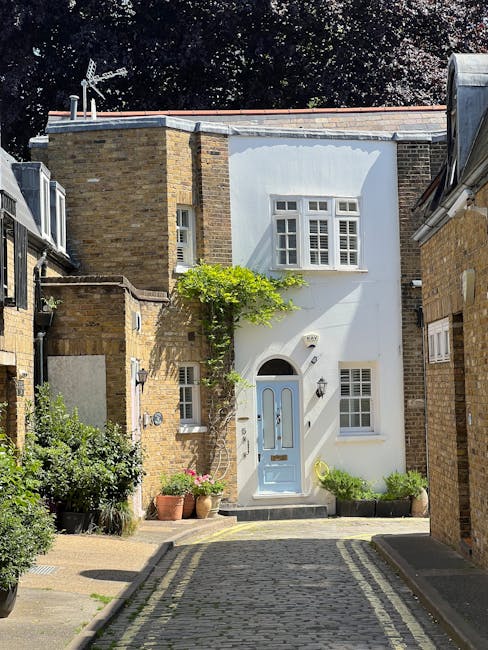
What to know about difficult access gardeners for Highgate mews

If you live in Highgate mews, you already know the charm is part of the package: tucked-away entrances, compact courtyards, shared passages, odd turns, and the kind of access that makes ordinary gardening feel a bit like moving furniture through a keyhole. That is exactly why what to know about difficult access gardeners for Highgate mews matters. The right team can protect walls, paving, plants, and neighbour relationships while still getting the job done properly. The wrong one? You will notice straight away. Clogged pathways, scratched finishes, awkward delays, and a job that feels more stressful than it should.
This guide explains how difficult-access gardening works, what good service looks like, what to ask before booking, and where the real risks sit. It is written for anyone comparing options, planning seasonal upkeep, or trying to solve a garden that is beautiful, but awkward to reach.
Why difficult access gardeners for Highgate mews matter
Highgate mews-style properties often bring together several access challenges at once. There may be no wide front gate, limited parking, narrow side routes, shared entrances, delicate paving, overhead branches, or neighbours who understandably do not want a team blocking the only through-route at 8:00 a.m. Add in wet weather, bins, bikes, prams, and the occasional tight corner, and gardening becomes less about cutting grass and more about managing the whole site carefully.
That is why specialist access planning matters. A competent team does not just turn up with tools and hope for the best. They think through how materials will be carried in, where waste will be taken out, what can be done by hand, and which tasks need smaller equipment. In our experience, the best results come from treating the garden, the access route, and the neighbours as one working environment.
There is also a quality issue. A small courtyard or mews garden can look worse after a rushed visit if compacted soil, crushed edging, or clumsy movement damages the structure. When access is tight, good gardening becomes part horticulture and part logistics. A bit of unglamorous coordination, to be fair, but that is what keeps the place looking right.
If your wider outside space needs more than routine upkeep, it can help to look at the broader services overview so you understand which tasks fit maintenance, clearance, landscaping, or specialist work.
How difficult access gardeners for Highgate mews works
The process usually starts with a site discussion. Good gardeners will want to understand where they can enter, whether there are steps, how wide the route is, whether there are shared areas, and if any items must be protected. It sounds simple. It is simple, really. But skipping this stage is where most problems begin.
From there, the team will usually decide what equipment is practical. For example, a compact mower may suit a small level patch, but a bulky machine is often a poor fit for narrow access. Long-reach tools can make hedge trimming safer where there is no room to position ladders easily. For overgrown or cluttered spaces, the job may need staged clearance before any finishing work starts. If you are looking at that sort of reset, the garden clearance service is often the sensible first step.
Waste handling is another key part of the process. A narrow mews route means the team may need to bag waste in smaller loads, use hand-carry methods, or schedule extra time for removal. That may sound like a small detail, but it makes a big difference to your day. Nobody wants a pile of cuttings sitting by the gate because the exit plan was vague.
Once the access route is understood, the team should sequence the work carefully. The usual order is:
- protect surfaces and identify trip hazards
- move in tools and materials in a controlled way
- complete the main task with as little repeated carrying as possible
- collect, bag, and remove waste safely
- check the finished area for missed debris, damage, or blocked access
That sequence may sound obvious, but in tight spaces it is the difference between a calm visit and a messy one.
Key benefits and practical advantages
There are some obvious benefits to using gardeners who understand difficult access. There are also a few quieter ones that people only notice later, once the first visit has gone smoothly.
- Less disruption. Narrow routes are managed with care, so shared entrances stay usable and neighbours are less likely to be inconvenienced.
- Reduced damage risk. Careful movement helps protect paving, wall finishes, railings, and planted borders.
- Better results in small spaces. Compact gardens need precision, not brute force.
- Cleaner waste removal. Small-load handling often means less mess and fewer awkward leftovers.
- More realistic planning. The work is scoped around access conditions, so timings and expectations are more accurate.
There is also a reassurance factor. When you know a team has thought the access through, you stop worrying about whether they will fit through the gate, whether the mower will scratch the stone, or whether someone is about to carry a ladder through a path that is clearly too narrow for it. That peace of mind counts for a lot.
For regular upkeep, difficult-access properties often benefit from a steady maintenance routine rather than one-off big interventions. A good garden maintenance plan keeps growth manageable, which in turn makes access simpler next time. Circular, yes, but true.
Who this is for and when it makes sense
This type of service is not just for one kind of property owner. It can make sense for homeowners, landlords, managing agents, and residents' associations. If your outside space is valuable but awkward to reach, you are in the right category.
You may need difficult-access gardeners if:
- the garden is behind a mews, alley, or shared passage
- there is limited parking for equipment or waste removal
- the entrance is narrow, stepped, or partially obstructed
- the garden includes fragile finishes, decking, or tight corners
- you need hedge work, mowing, or clearance but standard equipment will not fit
- you want regular upkeep without annoying the entire row of neighbours
It also makes sense if you have a garden that is not actually large, but still difficult to service. Compact courtyards can be surprisingly awkward. One minute you are looking at a tidy patch of green; the next you are asking how on earth anyone is meant to carry cuttings out without making a mess. Been there, more than once.
If the space includes overgrown shrubs, blocked routes, or self-seeded growth, specialist trimming may help. For example, hedge trimming can quickly restore usable space along a narrow boundary, and lawn mowing may need careful path planning if the grass sits behind a tight turn or step.
Step-by-step guidance
Here is a practical way to approach a difficult-access garden job without making it harder than it needs to be.
1. Walk the route before you book
Take note of the entrance width, height restrictions, surface type, lighting, and anything that could slow down movement. A quick photo set can help, especially if the access changes between day and evening. A small issue, like a locked side gate or a low overhang, can completely change the job plan.
2. Decide what really needs doing
In tighter spaces, the most efficient jobs are often the ones that combine tasks sensibly. For example, a small courtyard might need clearance first, then trimming, then shaping, then a light tidy-up. If you are planning a larger refresh, it may be worth discussing landscape gardening or even broader landscaping if the layout itself is part of the problem.
3. Ask how waste will be removed
This is one of those boring questions that saves a lot of hassle. Will waste be bagged in small loads? Is there a skip? Can cuttings be taken out through the same route without blocking access? If the site has a lot of green waste, ask whether the team uses a structured removal process and whether recycling practices are built in.
4. Confirm tools and equipment
You want to know whether the team will use hand tools, compact powered tools, low-noise kit, or special access equipment. The best answer is usually the most practical one, not the flashiest one. A smaller tool used well is far better than a large machine that cannot turn properly at the gate.
5. Protect surfaces and fixed features
Ask how walls, timber edging, decking, railings, and paving will be protected. If your space includes decking or a raised platform, mention it early. A careful team should plan around it, and if relevant you may want to explore decking services if repairs or replacement are needed alongside garden work.
6. Set a realistic time window
Tight access usually means slower movement, and slower movement is not a bad thing. It is just reality. Give the job enough time so the team is not rushing through narrow routes with cuttings in hand. You will usually get a neater result, and less stress all round.
7. Check the final finish
After the work is complete, walk the site from the access point inward. Look for leftover debris, blocked paths, damaged plants, or any issue that may not be obvious from the centre of the garden. A five-minute final check often saves a follow-up call.
Expert tips for better results
There are a few small habits that make a difficult-access job go much better. Nothing dramatic. Just the sort of practical know-how that tends to separate tidy work from awkward work.
- Book before the garden becomes overgrown. Access gets harder as growth spills into paths and gates.
- Be honest about the awkward bits. If there is a step, a slippery patch, or a narrow pinch point, mention it. No drama, just facts.
- Choose maintenance over rescue work where possible. Regular visits are far easier than trying to cut back six months of growth through a tiny entrance.
- Keep bins, bikes, and storage clear on the day. Every extra object slows the job and increases the chance of knock-on damage.
- Use quiet, compact methods when neighbours are close. In mews settings, low-disruption work tends to go down better all round.
One useful rule of thumb: if you would not want to carry a full bag of clippings through it, the access route probably needs planning rather than improvisation. Sounds obvious, but people overlook it all the time.
If the garden backs onto a heavily planted boundary or has older trees creating shade and root competition, you may also need support from tree lopping and removal specialists. Not every overhanging branch needs drastic action, of course, but it helps to know when a larger issue is affecting access, light, or safety.
Common mistakes to avoid
Most access-related problems are avoidable. They usually happen because someone assumed the job would be straightforward. In mews properties, straightforward is rarely the right word.
- Assuming standard equipment will fit. It might, but do not guess.
- Ignoring the waste route. You can have a neat finish and still create a mess if exit planning is poor.
- Leaving access checks until the day of the job. That is how delays start.
- Requesting every task at once without prioritising. Tight-access gardens often need staged work.
- Forgetting shared spaces. One blocked passage can upset several households.
- Choosing on price alone. The cheapest quote can become expensive if the access plan is weak.
There is a quieter mistake too: asking for a "quick tidy" when the garden actually needs proper structure. If the space is cluttered, unbalanced, or badly laid out, tidying only the surface may not solve the real issue. Sometimes the honest answer is clearance first, design second, maintenance third. That sequence is not exciting, but it works.
Tools, resources and recommendations
For difficult-access work, the right tools matter less than the right combination of tools and approach. A careful gardener may rely on compact hand tools, smaller bags, long-reach cutters, lightweight mowers, pruning saws, and protective sheets or boards for delicate paths. The aim is to reduce the number of movements, reduce strain, and avoid making access routes worse as you go.
From a homeowner's point of view, the most useful "resource" is often a clear site briefing. It can include:
- photos of gates, side passages, and steps
- notes about shared entrances or restricted times
- information about pets, bins, or parked vehicles
- details on where water is available, if needed
- any concerns about surfaces, finishes, or fragile planting
It also helps to understand what services are available if the garden needs more than routine care. For example, repeated access issues sometimes point to a layout that needs rethinking rather than more frequent cutting. In that case, a blend of maintenance, clearance, and small-scale redesign can be more effective than trying to patch over the same problem every month.
If you are comparing providers, keep an eye on the basics as well: how quotes are explained, how payment is handled, and whether the company is transparent about service scope. Pages like pricing and quotes, payment and security, and insurance and safety are worth reviewing before you commit.
Law, compliance, standards, or best practice
For most garden work, the key concerns are practical rather than legal, but there are still standards and duties worth taking seriously. A professional service should work in line with general UK expectations around safe working practices, risk awareness, and responsible waste handling. You do not need a lecture on this. You do need confidence that the team will not create avoidable hazards.
In difficult-access settings, best practice usually means:
- carrying out a sensible risk assessment before work starts
- using equipment suitable for the site rather than forcing awkward machinery through tight space
- keeping shared routes clear where possible
- protecting surfaces and minimising disturbance to neighbours
- handling green waste and debris responsibly
If a team operates with clear policies, that is a good sign. It suggests the business takes planning seriously, not just the visible part of the job. You can also look at the company's health and safety policy, recycling and sustainability approach, and broader about us information to understand how they work. For some customers, the accessibility statement is also useful, especially if there are specific concerns about communication or access arrangements.
One more thing. If your property sits within a managed block or shared mews arrangement, there may be internal rules about timings, waste storage, or access to common areas. Those are not always "legal" in the grand sense, but they matter in practice. A good contractor will be happy to work within them.
Options, methods, or comparison table
Not every difficult-access garden needs the same approach. Sometimes a full clearance is the right call. Sometimes a careful maintenance visit is enough. And occasionally the job is really about a layout issue that needs reshaping.
| Approach | Best for | Advantages | Limitations |
|---|---|---|---|
| Routine maintenance | Gardens that are already manageable but awkward to reach | Keeps growth under control, usually faster over time | May not solve deeper layout or overgrowth problems |
| Garden clearance | Overgrown, cluttered, or neglected spaces | Creates access quickly and resets the site | Can be more disruptive at the start |
| Targeted trimming and mowing | Small spaces needing precise upkeep | Efficient, neat, and lower-impact | Only works well if the site is already relatively open |
| Landscape-led improvement | Spaces with poor flow, awkward levels, or recurring access issues | Can solve the root cause, not just the symptoms | Needs more planning and usually more time |
In a Highgate mews setting, the right choice often depends on how often the garden gets visited and how cramped the route is. A neat little courtyard with a tight gate may just need the right maintenance rhythm. A neglected rear space with brambles, rubbish, and no obvious route in? That is a different story altogether.
Case study or real-world example
Here is a realistic example based on the kind of situation many mews properties face.
A homeowner had a small rear garden accessed through a narrow shared passage. The garden itself was not large, but a season of growth had pushed shrubs into the walkway, the lawn had become patchy, and a pile of cuttings from previous DIY attempts had made the route feel even tighter. The first problem was not the plants. It was access.
The work was handled in stages. The team started by clearing the route, then removed bulky waste in smaller loads rather than trying to move everything at once. After that, they trimmed back the hedge line to widen the usable space, cut and neatened the lawn, and finished by checking edges and hard surfaces for debris. No one rushed the gate. No one dragged a heavy machine across sensitive paving. Refreshingly sensible, really.
The key lesson was simple: when access is difficult, the order of operations matters almost as much as the gardening itself. Once the route was clear, everything else became easier. The garden looked better, but more importantly it became easier to maintain the following month.
Practical checklist
Use this before you book or before a team arrives. It keeps things calm, and calm is underrated.
- Confirm exactly where the team can enter and exit
- Measure the narrowest point if you can
- Note any steps, slopes, uneven paving, or low overhead points
- Remove parked bikes, bins, toys, and movable clutter
- Tell the team about shared spaces or neighbour restrictions
- Explain which surfaces need protecting
- Identify whether the job is maintenance, clearance, or a mix
- Ask how waste will be removed
- Check whether the quote includes difficult-access time
- Agree a sensible arrival window and finish expectation
- Keep a contact number handy on the day
- Do a final walk-through once the work is complete
If you want a smoother process, it is also sensible to read the practical site information on terms and conditions, complaints procedure, and cookie policy if you are reviewing the company's wider online information. Not thrilling reading, admittedly, but it can help you understand how the business operates.
Conclusion
What to know about difficult access gardeners for Highgate mews comes down to this: tight access is not just a physical challenge, it is a planning challenge. The best gardeners handle both. They think about routes, waste, surfaces, timing, neighbour impact, and the practical shape of the garden itself. That is what separates a smooth job from a frustrating one.
If your mews garden feels hard to manage, do not wait until it is overgrown and awkward. A careful plan now usually means less disruption later, better results, and a space that feels like part of the home again rather than an annual headache. And honestly, that is worth a lot.
Get a free quote today and see how much you can save.
Frequently Asked Questions
What makes a garden "difficult access" in a Highgate mews?
Usually it means the entrance is narrow, shared, stepped, awkwardly placed, or hard to reach with standard tools and equipment. The garden itself may be small, but the route in and out is what creates the challenge.
Can gardeners work through a very narrow passage?
Often yes, but it depends on the width, turns, surface condition, and what needs to be carried. Small tools and careful planning help. Sometimes the answer is to use lighter equipment and more manual handling.
Do difficult-access jobs take longer?
Usually they do. Even simple tasks can take extra time when materials need to be moved in smaller loads or when access has to be protected carefully. That is normal, not a bad sign.
Is garden clearance better than maintenance for an overgrown mews garden?
If the garden has become cluttered or difficult to enter, clearance is often the better starting point. Once access is restored, maintenance becomes much easier and usually more cost-effective over time.
How should I prepare before the gardeners arrive?
Clear movable clutter, unlock gates if needed, tell neighbours if shared space will be used, and let the team know about any surface or access concerns. A few minutes of prep can save a lot of faff later.
What equipment is usually used for tight-access garden work?
That varies. Hand tools, compact cutters, smaller mowers, and lightweight bags are common. The best choice depends on the task and the route, not just on the job title.
Will the team damage paving or walls?
A careful team should work to avoid that by using protective measures and sensible movement. Still, it is worth discussing delicate surfaces in advance, especially in older mews properties where finishes can be fragile.
Can hedge trimming be done in a narrow mews garden?
Yes, if the access route allows safe movement and the hedge can be reached without forcing equipment into the space. Long-reach tools are often useful here, especially where ladders would be a poor fit.
How do I know if I need landscaping rather than just garden maintenance?
If the same access issue keeps coming back, or if the layout itself makes every visit awkward, landscaping may be the better solution. Maintenance treats the symptoms; landscaping can help fix the cause.
Are difficult-access gardeners suitable for landlords and managed properties?
Absolutely. In fact, they are often a very good fit where multiple households share a route or where access needs to be kept clear and predictable.
Should I ask about insurance before booking?
Yes. Any professional service should be able to explain how they handle insurance and safety. That matters even more in tight spaces, where the chance of accidental damage is higher if planning is poor.
What is the biggest mistake people make with mews garden jobs?
Waiting too long. Once growth, clutter, and debris build up, access becomes harder and the job gets more expensive and less pleasant. A little routine care goes a long way.
At the end of the day, a difficult-access garden is still a garden. With the right approach, it can be tidy, welcoming, and genuinely easy to live with. That is the goal, really. Nothing flashy. Just a well-kept space that feels calm when you open the gate.